The World Is Small That We Meat Again
W hether you are concerned nearly your health, the surroundings or animal welfare, scientific testify is piling up that meat-free diets are best. Millions of people in wealthy nations are already cut back on animal products.
Of course livestock farmers and meat lovers are unsurprisingly fighting back and it can get disruptive. Are avocados really worse than beef? What nearly bee-massacring almond production?
The coronavirus pandemic has added another ingredient to that mix. The rampant destruction of the natural world is seen as the root crusade of diseases leaping into humans and is largely driven past farming expansion. The world'south top biodiversity scientists say even more deadly pandemics volition follow unless the ecological devastation is chop-chop halted.
Food is also a vital part of our culture, while the affordability of food is an issue of social justice. So there isn't a single perfect nutrition. Just the bear witness is clear: whichever healthy and sustainable nutrition yous choose, it is going to have much less red meat and dairy than today'due south standard western diets, and quite possibly none. That's for two bones reasons.
First, the over-consumption of meat is causing an epidemic of affliction, with most $285bn spent every twelvemonth around the world treating affliction caused by eating scarlet meat lonely. Second, eating plants is simply a far more than efficient use of the planet'south stretched resources than feeding the plants to animals and so eating them. The global livestock herd and the grain it consumes takes up 83% of global farmland, merely produces just 18% of food calories.
So what about all those arguments in favour of meat-eating and against vegan diets? Permit's start with the big beef about blood-red meat.
i
Meaty matters
Claim:
Grass-fed beef is low carbon
This is truthful only when compared to intensively-reared beef linked to forest destruction. The United kingdom'southward National Farmers Spousal relationship says Britain beef has only half the emissions compared to the world boilerplate. But a lot of research shows grass-fed beef uses more land and produces more – or at best like – emissions because grain is easier for cows to digest and intensively reared cows alive shorter lives. Both factors mean less methyl hydride. Either way, the emissions from fifty-fifty the best beefiness are still many times that from beans and pulses.
There's more. If all the world's pasture lands were returned to natural vegetation, information technology would remove greenhouse gases equivalent to near 8 bn tonnes of carbon dioxide per year from the temper, according to Joseph Poore at Oxford Academy. That's about xv% of the world's full greenhouse gas emissions. Only a small fraction of that pasture land would exist needed to grow food crops to supplant the lost beef. So overall, if tackling the climate crisis is your thing, and then beefiness is not.
2
Claim:
Cattle are actually neutral for climate, because marsh gas is relatively curt-lived greenhouse gas
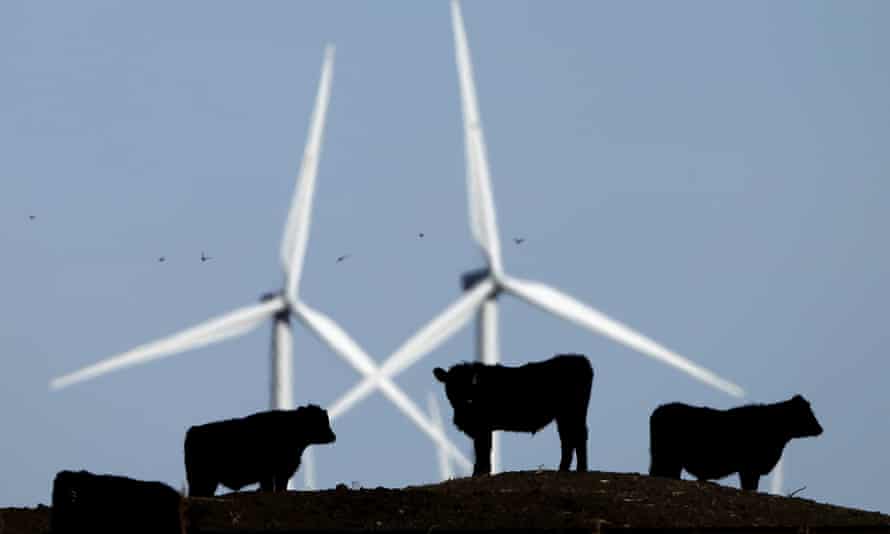
Marsh gas is a very powerful greenhouse gas and ruminants produce a lot of information technology. But it just remains in the atmosphere for a relatively short fourth dimension: half is broken downwardly in nine years. This leads some to argue that maintaining the global cattle herd at current levels – virtually 1 billion animals – is not heating the planet. The burping cows are just replacing the methyl hydride that breaks down as time goes by.
But this is simply "creative accounting", co-ordinate to Pete Smith at the University of Aberdeen and Andrew Balmford at the University of Cambridge. Nosotros shouldn't argue that cattle farmers can continue to pollute merely because they have washed so in the by, they say: "We need to exercise more than than just stand up even so." In fact, the short-lived nature of methane really makes reducing livestock numbers a "particularly attractive target", given that we desperately need to cut greenhouse gas emissions equally soon as possible to avoid the worst impacts of the climate crisis.
In whatever case, simply focusing on methane doesn't make the rampant deforestation by cattle ranchers in Due south America go abroad. Even if you ignore methane completely, says Poore, animate being products still produce more CO2 than plants. Even one proponent of the methane claim says: "I agree that intensive livestock farming is unsustainable."
3
Claim:
In many places the only thing you lot can grow is grass for cattle and sheep
NFU president, Minette Batters, says: "60-v percent of British land is only suitable for grazing livestock and we have the correct climate to produce high-quality cherry meat and dairy."
"Only if everybody were to make the argument that 'our pastures are the all-time and should exist used for grazing', then there would be no way to limit global warming," says Marco Springmann at the University of Oxford. His work shows that a transition to a predominantly establish-based flexitarian diet would gratis upwards both pasture and cropland.
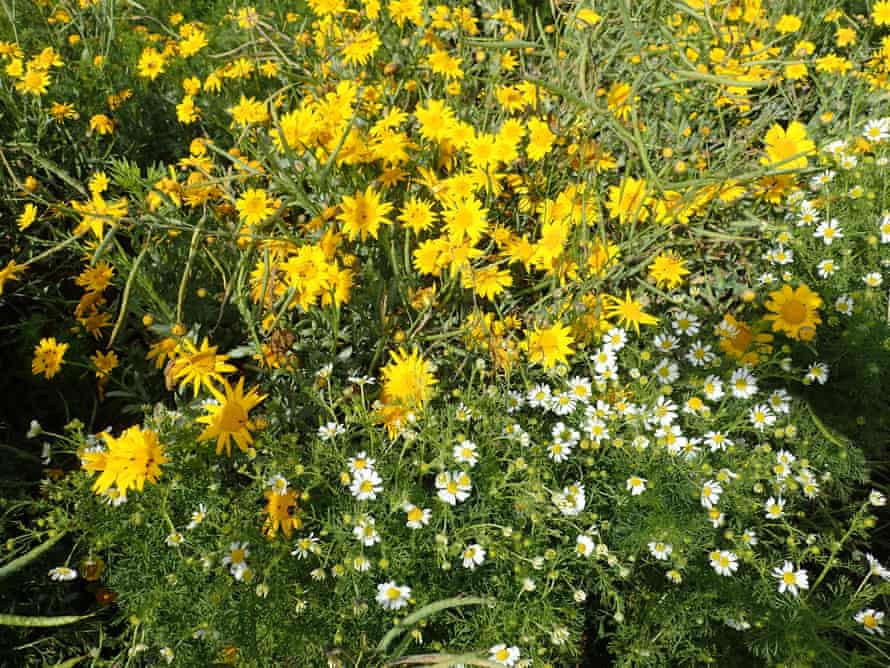
The pasture could instead exist used to grow trees and lock up carbon, provide land for rewilding and the restoration of nature, and growing bio-energy crops to readapt fossil fuels. The crops no longer existence fed to animals could instead become nutrient for people, increasing a nation's self-sufficiency in grains.
4
Claim:
Grazing cattle aid shop carbon from the atmosphere in the soil
This is truthful. The problem is that fifty-fifty in the very all-time cases, this carbon storage offsets merely twenty%-sixty% of the total emissions from grazing cattle. "In other words, grazing livestock – even in a best-example scenario – are net contributors to the climate problem, as are all livestock," says Tara Garnett, likewise at the University of Oxford.
Furthermore, enquiry shows this carbon storage reaches its limit in a few decades, while the problem of methane emissions continue. The stored carbon is also vulnerable - a alter in land apply or even a drought can see it released again. Proponents of "holistic grazing" to trap carbon are likewise criticised for unrealistic extrapolation of local results to global levels.
v
Claim:
There is much more wildlife in pasture than in monoculture cropland
That is probably truthful but misses the real point. A huge driver of the global wildlife crisis is the past and continuing devastation of natural habitat to create pasture for livestock. Herbivores do accept an important part in ecosystems, but the high density of farmed herds ways pasture is worse for wildlife than natural land. Eating less meat means less destruction of wild places and cutting meat significantly would too free upwardly pasture and cropland that could be returned to nature. Furthermore, a third of all cropland is used to grow animal feed.
half-dozen
Claim:
We need animals to convert feed into protein humans can eat
In that location is no lack of protein, despite the claims. In rich nations, people usually eat 30-50% more than protein than they need. All protein needs tin can hands exist met from plant-based sources, such as beans, lentils, nuts and whole grains.
But animals tin play a function in some parts of Africa and Asia where, in India for example, waste from grain product can feed cattle that produce milk. In the balance of the world, where much of cropland that could be used to feed people is actually used to feed animals, a cutting in meat eating is still needed for agriculture to be sustainable.
7
'What most …?'
Claim:
What nearly soya milk and tofu that is destroying the Amazon?
Information technology's not. Well over 96% of soy from the Amazon region is fed to cows, pigs and chickens eaten around the earth, according to information from the UN Food and Agriculture Organization, says Poore. Furthermore, 97% of Brazilian soy is genetically modified, which is banned for human consumption in many countries and is rarely used to make tofu and soya milk in any instance.
Soya milk also has much smaller emissions and state and water employ than cow's milk. If you are worried about the Amazon, not eating meat remains your best bet.
viii
Claim:
Almond milk production is massacring bees and turning land into desert
Some almond production may well cause environmental problems. But that is because rising demand has driven rapid intensification in specific places, like California, which could be addressed with proper regulation. Information technology is zero to do with what almonds need to grow. Traditional almond production in Southern Europe uses no irrigation at all. It is likewise peradventure worth noting that the bees that die in California are not wild, but raised past farmers like six-legged livestock.
Like soya milk, almond milk still has lower carbon emissions and land and water apply than cow's milk. But if you lot are notwithstanding worried, at that place are plenty of alternatives, with oat milk commonly coming out with the everyman environmental footprint.
nine
Claim:
Avocados are causing droughts in places
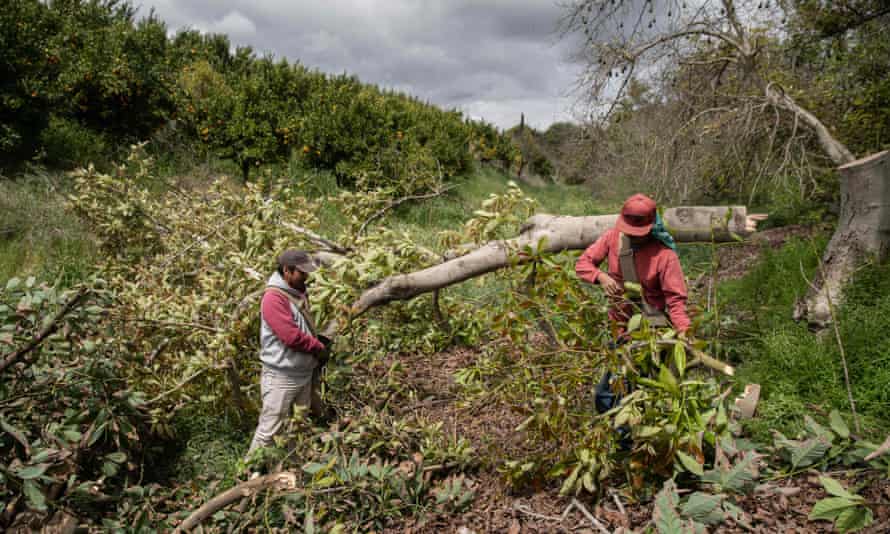
Again, the problem here is the rapid growth of product in specific regions that lack prudent controls on water use, like Peru and Republic of chile. Avocados generate a 3rd of the emissions of chicken, a quarter of those of pork, and a 20th of beef.
If you are still worried well-nigh avocados, yous tin can of grade choose not to eat them. Simply it's non a reason to eat meat instead, which has a much bigger water and deforestation footprint.
The marketplace is likely to solve the problem, every bit the loftier demand from consumers for avocados and almonds incentivises farmers elsewhere to abound the crops, thereby alleviating the pressure on electric current product hotspots.
10
Claim:
Quinoa boom is harming poor farmers in Peru and Bolivia
Quinoa is an amazing nutrient and has seen a boom. But the idea that this took food from the mouths of poor farmers is wrong. "The claim that rising quinoa prices were pain those who had traditionally produced and consumed information technology is patently false," said researchers who studied the outcome.
Quinoa was never a staple food, representing just a few per centum of the nutrient budget for these people. The quinoa boom has had no effect on their nutrition. The boom also significantly boosted the farmers' income.
In that location is an issue with falling soil quality, every bit the state is worked harder. But quinoa is now planted in Prc, India and Nepal, as well as in the US and Canada, easing the burden. The researchers are more than worried at present nigh the loss of income for S American farmers as the quinoa supply rises and the toll falls.
eleven
Claim:
What near palm oil destroying rainforests and orangutans?
Palm oil plantations have indeed led to terrible deforestation. But that is an issue for everybody, not only vegans: it's in most half of all products on supermarket shelves, both food and toiletries. The International Wedlock for the Conservation of Nature argues that choosing sustainably produced palm oil is actually positive, because other oil crops take upward more land.
But Poore says: "We are abandoning millions of acres a year of oilseed land around the earth, including rapeseed and sunflower fields in the erstwhile Soviet regions, and traditional olive plantations." Making better use of this land would be preferable to using palm oil, he says.
12
Good for you questions
Claim:
Vegans don't get plenty B12, making them stupid
A vegan nutrition is mostly very healthy, but doctors have warned about the potential lack of B12, an important vitamin for encephalon function that is plant in meat, eggs and cows' milk. This is easily remedied by taking a supplement.
All the same, a closer await reveals some surprises. B12 is made by bacteria in soil and the guts of animals, and free-range livestock ingest the B12 as they graze and peck the ground. Just most livestock are not free-range, and pesticides and antibiotics widely used on farms kill the B12-producing bugs. The issue is that virtually B12 supplements - ninety% according to one source – are fed to livestock, not people.
So in that location'southward a option hither between taking a B12 supplement yourself, or eating an animal that has been given the supplement. Algae are a found-based source of B12, although the caste of bio-availability is non settled even so. Information technology is also worth noting that a pregnant number of not-vegans are B12 deficient, particularly older people. Among vegans the figure is only virtually 10%.
xiii
Merits:
Plant-based alternatives to meat are really unhealthy
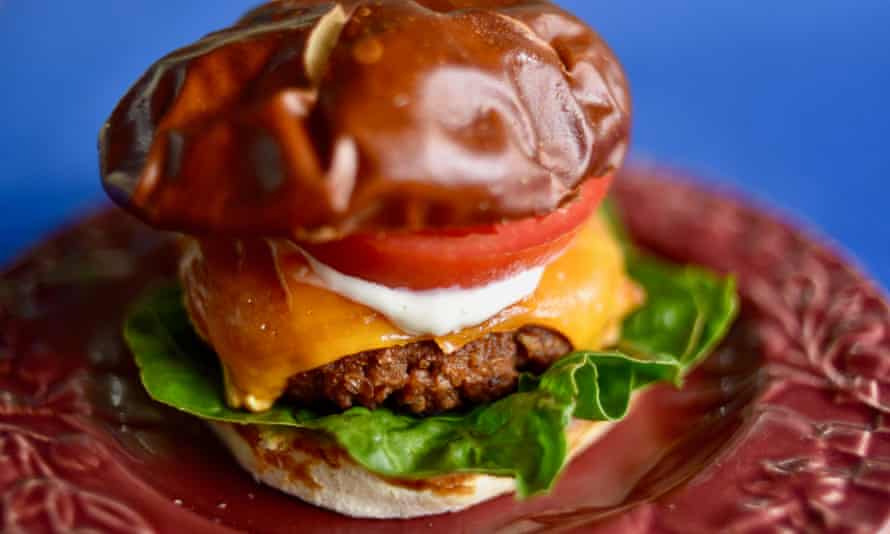
The rapid rising of the constitute-based burger has prompted some to criticise them every bit ultra-processed junk food. A constitute-based burger could be unhealthier if the salt levels are very loftier, says Springmann, simply it is most probable to still be healthier than a meat burger when all nutritional factors are considered, specially fibre. Furthermore, replacing a beef burger with a plant-based alternative is certain to be less damaging to the environment.
At that place is certainly a strong argument to exist fabricated that overall nosotros consume far too much processed nutrient, but that applies just as much to meat eaters as to vegetarians and vegans. And given that most people are unlikely to give up their burgers and sausages whatsoever time, the plant-based options are a useful alternative.
fourteen
'Communicable out' vegans
Claim:
Fruit and vegetables aren't vegan because they rely on animal manure as fertiliser
Well-nigh vegans would say it's just lightheaded to say fruit and veg are fauna products and plenty are produced without creature dung. In any case there is no reason for horticulture to rely on manure at all. Synthetic fertiliser is easily made from the nitrogen in the air and there is plenty of organic fertiliser bachelor if we chose to use it more than widely in the form of human faeces. Over application of fertiliser does cause h2o pollution bug in many parts of the globe. But that applies to both constructed fertiliser and manure and results from bad management.
15
Claim:
Vegan diets kill millions of insects
Piers Morgan is amongst those railing against "hypocrite" vegans because commercially kept bees dice while pollinating almonds and avocados and combine harvesters "create mass murder of bugs" and small mammals while bringing in the grain harvest. Only almost everyone eats these foods, not just vegans.
It is true that insects are in a terrible decline across the planet. Just the biggest drivers of this are the devastation of wild habitat, largely for meat production, and widespread pesticide utilize. If it is insects that you lot are really worried nigh, and so eating a constitute-based organic diet is the option to choose.
16
Claim:
Telling people to eat less meat and dairy is denying vital nutrition to the globe'due south poorest
A "planetary health diet" published by scientists to run across both global health and environmental needs was criticised by journalist Joanna Blythman: "When ideologues living in affluent countries pressurise poor countries to eschew animal foods and go plant-based, they are displaying crass insensitivity, and a colonial White Saviour mindset."
In fact, says Springmann, who was part of the team behind the planetary health diet, information technology would meliorate nutritional intake in all regions, including poorer regions where starchy foods currently dominate diets. The big cuts in meat and dairy are needed in rich nations. In other parts of the world, many healthy, traditional diets are already depression in creature products.
17
On the road
Merits:
Transport emissions mean that eating plants from all over the world is much worse than local meat and dairy
"'Eating local' is a recommendation you hear oft [but] is ane of the most misguided pieces of advice," says Hannah Ritchie, at the University of Oxford. "Greenhouse gas emissions from transportation make upwards a very small-scale corporeality of the emissions from nutrient and what you lot eat is far more important than where your nutrient traveled from."
Beefiness and lamb take many times the carbon footprint of nigh other foods, she says. So whether the meat is produced locally or shipped from the other side of the world, plants volition still have much lower carbon footprints. Send emissions for beef are about 0.5% of the total and for lamb it's 2%.
The reason for this is that almost all food transported long distances is carried by ships, which can arrange huge loads and are therefore adequately efficient. For example, the aircraft emissions for avocados crossing the Atlantic are nearly 8% of their total footprint. Air freight does of course result in high emissions, but very footling nutrient is transported this fashion; information technology accounts for just 0.16% of food miles.
18
Merits:
All the farmers who raise livestock would be unemployed if the earth went meat-free
Livestock farming is massively subsidised with taxpayers money around the world – unlike vegetables and fruit. That money could exist used to back up more sustainable foods such as beans and nuts instead, and to pay for other valuable services, such as capturing carbon in woodlands and wetlands, restoring wild fauna, cleaning water and reducing flood risks. Shouldn't your taxes be used to provide public goods rather than harms?
So, nutrient is complicated. But however much we might wish to go on farming and eating as we exercise today, the evidence is crystal clear that consuming less meat and more than plants is very good for both our health and the planet. The fact that some plant crops have problems is non a reason to swallow meat instead.
In the end, yous will choose what yous swallow. If you want to eat healthily and sustainably, you don't have to stop eating meat and dairy altogether. The planetary health diet allows for a beef burger, some fish and an egg each week, and a glass of milk or some cheese each day.
Nutrient writer Michael Pollan foreshadowed the planetary health nutrition in 2008 with a simple 7-discussion rule: "Eat nutrient. Not too much. Mostly plants." Simply if y'all desire to take the maximum affect on fighting the climate and wild fauna crisis, and so it is going to be all plants.
Source: https://www.theguardian.com/environment/2020/jun/19/why-you-should-go-animal-free-arguments-in-favour-of-meat-eating-debunked-plant-based
0 Response to "The World Is Small That We Meat Again"
Post a Comment